There is a particular satisfaction in opening the garage door to an E30 that has been improved one system at a time. The car still looks familiar, but the steering is tighter, the brakes have a real pedal, and every changed part has a reason behind it. The best BMW E30 modifications do not turn the chassis into a random collection of expensive parts. They create a coherent car that matches how you actually drive it.
Before ordering anything, write down the build brief. Is this a weekend street car, a back-road car, a track-day project, or a period-correct restoration with sharper manners? A 1989 325i used for commuting needs different priorities than a stripped 1987 325is. Record the chassis, engine, transmission, wheel size, current suspension, and budget. That page will save you from buying parts twice.
Start with a Baseline, Not a Shopping Cart
The first stage of BMW E30 modifications should be inspection. A tired original suspension can make a premium coilover kit feel disappointing, while worn engine mounts can create vibrations that seem like transmission trouble. Put the car on stands and inspect the front control arms, rear trailing arm bushings, tie rods, ball joints, wheel bearings, differential mounts, driveshaft guibo, and subframe mounting points.
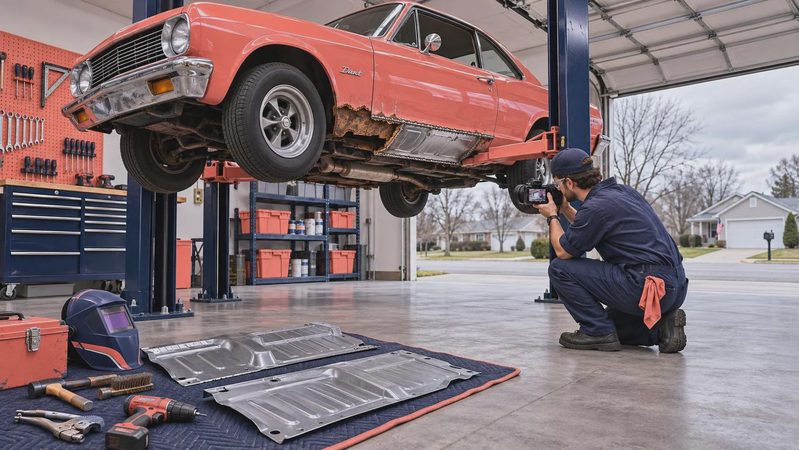
Look for rust around the rocker panels, floor areas, jack points, battery tray, and rear subframe supports. Check brake hoses for cracking and inspect hard lines before increasing engine output. Compression and leak-down testing give you a useful engine baseline, and a cooling-system pressure test can reveal small leaks before they become a roadside failure. Spend a weekend documenting the starting condition with photos, measurements, and notes.
A refresh is not glamorous, but it establishes the data. If the car wanders under braking, measure alignment and inspect bushings before blaming the tires. If the steering feels vague, check the rack, coupler, tie rods, and front geometry. Fixing basic wear often delivers more improvement per dollar than a flashy upgrade.
Suspension: Control the Chassis Without Ruining It
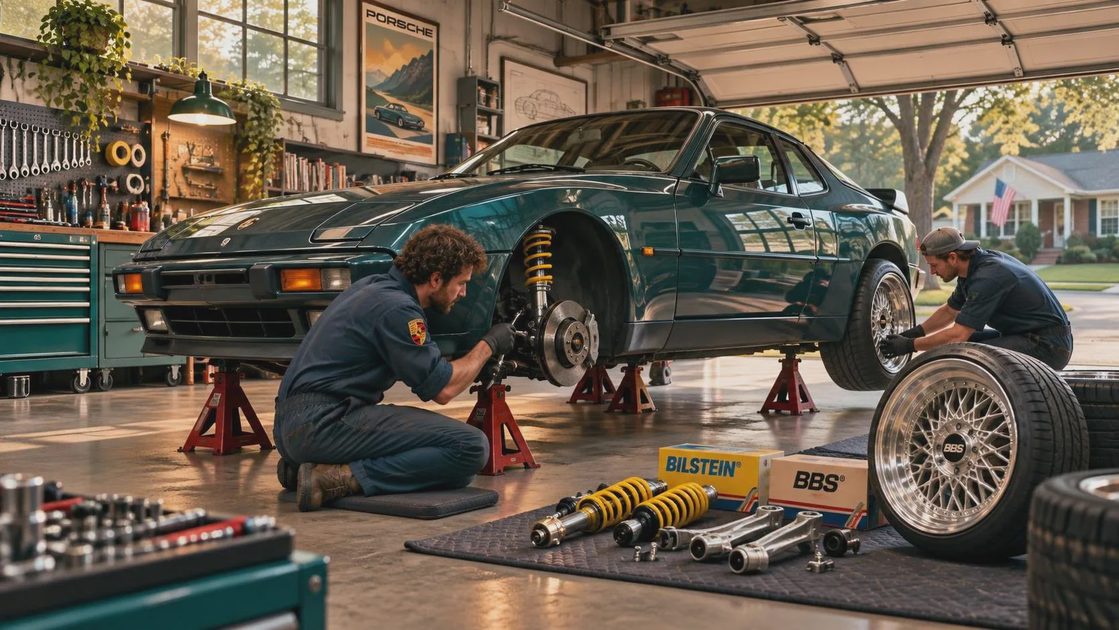
Suspension is where many BMW E30 modifications either become excellent or become exhausting. For a street-driven car, quality fixed dampers from Bilstein or Koni paired with fresh springs can provide a firm, usable setup. A mild drop of roughly 25 to 35 millimeters usually preserves better suspension travel than an aggressively low stance, especially on rough American roads.
Coilovers offer ride-height adjustment, but adjustment is not automatically performance. Choose spring rates and damper valving for the car's weight, tire, and use. A track-focused E30 can tolerate stiffer rates and less compliance; a street car needs enough movement to keep the tires planted over broken pavement. Adjustable top mounts can add useful camber, although they also transmit more noise and vibration into the cabin.
Do not ignore the rear. Fresh trailing arm bushings, correctly installed subframe bushings, and a properly secured differential mount help the rear axle behave consistently. Polyurethane parts can sharpen response, but different compounds transmit more road noise and can bind when installed incorrectly. Rubber is still a valid choice for a car that sees long trips.
Brakes, Tires, and the Parts You Actually Feel
Among the most useful BMW E30 modifications are upgrades that improve confidence rather than dyno numbers. Begin with fresh rotors, quality pads, stainless or new rubber hoses, clean caliper slides, and high-temperature brake fluid. A larger brake conversion can be worthwhile when it fits the wheel diameter and balances correctly with the rear system. More piston count alone does not guarantee a shorter stop.
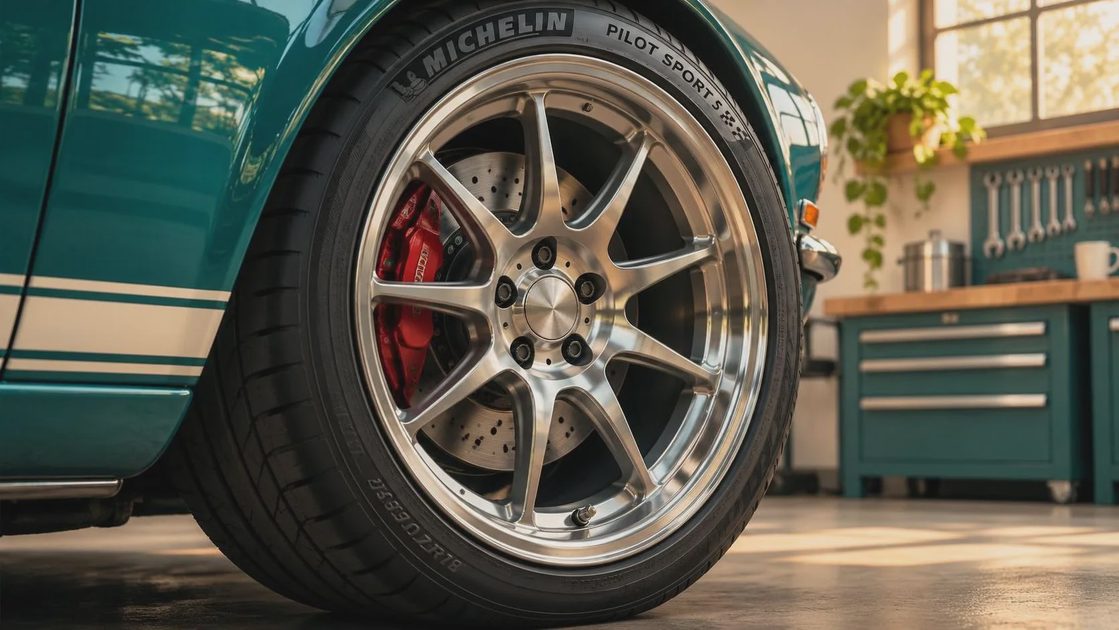
Tires are the contact patch, so do not spend $2,000 on suspension while running old, heat-cycled rubber. A quality 205 or 225-width performance tire on a properly chosen 15- or 16-inch wheel can transform turn-in and braking. Check clearance at full lock and full compression. Wheel offset matters as much as diameter, and spacers should be hub-centric, correctly sized, and installed with appropriate hardware.
After installing parts, get a four-wheel alignment and save the printout. A street baseline with modest negative camber, even toe settings, and a centered steering wheel is more useful than copying a track alignment without understanding the consequences. Recheck torque after the first drive and listen for contact, looseness, or new vibration.
Engine Choices: Make the Goal Clear First
Engine work is often the most expensive branch of BMW E30 modifications, so decide whether you want response, reliability, sound, or outright power. A healthy M20 with refreshed cooling, sealed vacuum lines, a properly adjusted valve train, and a well-maintained fuel system can be a rewarding street engine. Maintenance parts are not a consolation prize; they are the foundation of a dependable build.
An M50 or M52 swap can deliver modern power and a strong aftermarket, but the project includes wiring, cooling, exhaust, oil-pan clearance, accessory placement, and drivetrain decisions. A later engine does not become reliable simply because it is newer. Replace aging hoses, seals, sensors, belts, and mounts while access is easy. Keep a wiring diagram and label every connector before removing the original harness.
Forced induction deserves a separate plan. Fuel delivery, engine management, intercooling, clutch capacity, and cooling all need to support the target output. Set a conservative power goal that the chassis, differential, brakes, and tires can use. A car with 220 usable horsepower and sorted response is usually more enjoyable than a temperamental project chasing a larger number.
Drivetrain, Cooling, and Electrical Reliability
The E30 rewards attention to systems people often postpone. Replace a worn clutch and inspect the flywheel before adding power. Check the transmission mounts, shifter linkage, guibo, center support bearing, and differential seals. Excess drivetrain movement can feel like a bad clutch or create a sharp clunk when you lift off the throttle.
Cooling deserves priority because aluminum radiators and electric fans do not compensate for poor airflow or neglected hoses. Use a known-good water pump, thermostat, expansion tank, cap, and radiator. Bleed the system carefully and verify operating temperature under traffic and highway load. Electrical grounds, fuse-box connections, battery cables, and charging voltage should also be checked before adding audio equipment or auxiliary electronics.
When troubleshooting, change one variable at a time. Record the symptom, outside temperature, fuel used, diagnostic readings, and repair result. That habit turns a frustrating intermittent fault into a searchable build record instead of a pile of guesses.
A Build Sequence That Keeps the Project Moving
A sensible order for BMW E30 modifications is safety and structure first, suspension and brakes second, tires and alignment third, drivetrain reliability fourth, and power last. This sequence prevents a high-output engine from exposing five unrelated weaknesses at once. It also lets you enjoy the car between major phases.
Set a parts budget with a reserve of at least 15 to 20 percent for hardware, fluids, seals, machine work, and the small failures that appear during disassembly. An apparently simple suspension job can require seized fasteners, replacement brake lines, or worn mounting points. Buy quality tools where they affect safety: a calibrated torque wrench, spring compressor suited to the job, jack stands, multimeter, and brake bleeding equipment.
Photograph routing before removal, label bags by assembly, and write torque values in the project notes. When the car is apart for six weeks, memory is not a reliable service manual. Keep old parts until the replacement is confirmed, and never discard a bracket or spacer without understanding its purpose.
Make the Build Yours and Document the Evidence
The right BMW E30 modifications depend on the car in front of you, not a universal parts list. A clean 318i can become an excellent momentum car with suspension, tires, brakes, and careful weight management. A 325i may justify a stronger differential, improved cooling, and more serious engine management. Neither approach is inferior when it matches the intended use.
Write down alignment settings, tire pressures, spring rates, fluid types, temperatures, and photographs of every major stage. Note what failed, what had to be redone, and what changed after each test drive. That record becomes more valuable as the build ages and makes future diagnosis much faster.
The finished E30 should feel deliberate: predictable when pushed, comfortable enough to drive home, and mechanically honest about its limits. Build in stages, test each change, and resist parts that solve a problem you do not have. Post your build. We'll read the whole thing.

No comments yet.