If you spend enough time in a garage, you learn that the best cars to modify are not always the fastest stock cars. The good ones give you room to learn, room to fix mistakes, and enough aftermarket support that one bad decision does not sink the whole project. A solid platform should have cheap wear parts, a deep forum trail, and a chassis that still feels worthwhile after the first round of coils, tires, and an alignment. That is why a Civic, Miata, WRX, Mustang GT, or older BMW 3 Series keeps showing up in build threads. The goal is not to buy the prettiest badge. The goal is to buy a car that rewards every weekend you put into it.
What makes a build platform worth your money
The first thing I look for is parts depth. If you can buy brake pads, bushings, injectors, and a replacement radiator from three different stores on a Tuesday night, you are starting in a good place. A platform with strong support usually means better pricing too. A set of lowering springs might run $250 to $400, basic coilovers from brands like Koni, Tein, or BC Racing can land from about $900 to $2,200, and a quality alignment after the install is another $120 to $180. That is real money, but it is manageable when the car itself does not need rare trim pieces or dealer-only sensors every time you touch it.
Rust, abuse, and half-finished turbo kits matter more than badge prestige. A clean, stock car with good service history is usually the smarter buy than a cheap one already covered in eBay parts and mystery wiring. I would rather start with a straight shell, a healthy transmission, and a stack of receipts than inherit somebody else’s “almost done” project. If the car has a manual gearbox, a limited-slip differential, and a known engine platform, the rest gets easier fast.
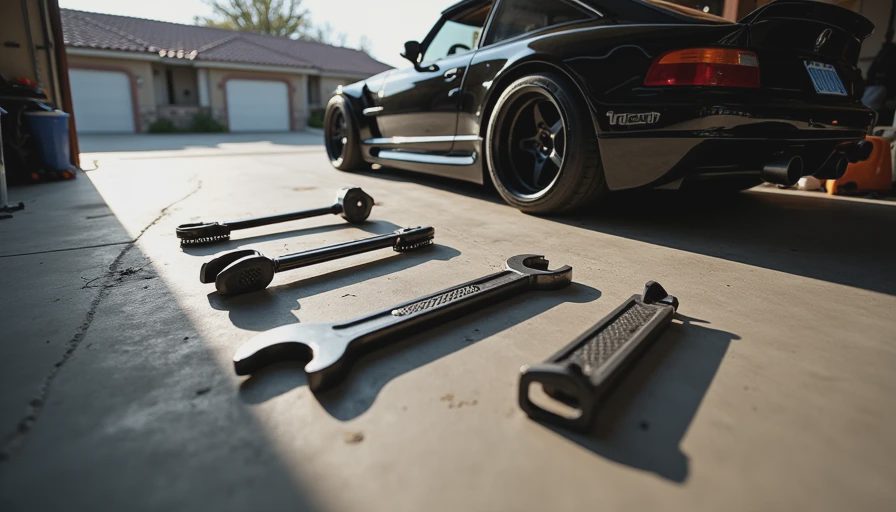
The best cars to modify if you want cheap parts and easy learning
For a first real project, the best cars to modify usually fall into the same group: light weight, huge community support, and engines that do not punish you for making small mistakes. A Miata is the textbook example. NA and NB cars are light, honest, and easy to work on, and a clean one can still be found in the roughly $5,000 to $12,000 range depending on rust and mileage. Put $800 into tires, $300 into pads and fluid, and another $1,000 to $1,500 into suspension and alignment, and the car feels transformed without opening the motor.
The Civic Si and older Integra crowd earns the same respect for a reason. Honda parts are everywhere, engines tolerate mileage when maintained, and the tuning path is well documented. A simple intake, header, exhaust, and Hondata or similar tune can make the car feel sharper without turning it into a headache. The same logic applies to the BRZ and GR86 pair. They are not bargain-basement cars anymore, but they respond well to chassis work, tire choice, and brake upgrades before you ever chase horsepower. A driver who wants corner speed, balance, and a huge knowledge base will not run out of material.
Where power builds get interesting
If you want more power from the start, buy a platform that already likes boost or has factory torque to spare. The modern Mustang GT is the obvious heavyweight here. The Coyote V8 responds well to intake, exhaust, tire, and gearing changes, and the aftermarket is massive. Used prices vary a lot, but the support does not. A WRX or STI brings all-wheel-drive traction and a huge catalog of turbo parts, though the smart move is to budget for maintenance before chasing peak numbers. Fresh plugs, fluids, intercooler hoses, and a conservative tune matter more than a loud blow-off valve.
The Nissan 350Z and 370Z deserve a look too. They have strong parts support, a long track record, and enough chassis feel to stay interesting. A basic build might start with tires, pads, coilovers, and a limited-slip diff if the car does not already have one. From there, an exhaust, tune, and better cooling make sense. For turbo platforms, tools like Cobb Accessport, HP Tuners, or Hondata are not just accessories; they are how you keep the car honest after you change the airflow.
Best cars to modify when you want power without drama
Not every fast build needs to be a grenade. Some of the best cars to modify are the ones that give you power plus daily-driver manners. A Mustang GT with a manual transmission, for example, can be a weekend autocross car, a long-haul cruiser, and a straight-line toy all at once. A clean BMW E46 330i or E90 335i can also be a smart path if you are willing to stay on top of cooling, gaskets, and fluid changes. The reward is a chassis that still feels planted after the novelty wears off.
The key is buying with the end state in mind. If you want 350 to 450 wheel horsepower, do not start with a platform that needs an engine-out labor bill just to support a basic tune. Look for cars where the next step is obvious: better tires, better brakes, better cooling, then power. That sequence keeps the project moving and keeps the car drivable while you build it.
How to spend the first year without wasting money
The best money I have seen on a fresh build usually goes into the parts nobody posts on Instagram. A first-year plan should start with a full inspection, fresh fluids, good tires, and a proper alignment. After that, fix the weak link the car is already showing. A sloppy shifter, a mushy brake pedal, wheel hop, or bad damping will ruin the experience faster than a lack of horsepower. A lot of builders end up spending $2,500 to $7,000 in the first year before they touch engine internals, and that is not wasted money if the car becomes easier to trust.
A clean example helps here. I have seen a manual Civic turn into a seriously enjoyable back-road car with $1,100 in tires and brakes, $1,400 in suspension, and a tune that cost less than one major repair on a neglected turbo car. That is the kind of math that matters. In the end, the best cars to modify are the ones that let you stack small wins, keep the car alive, and still want to drive it hard next month. Post your build. We'll read the whole thing.

No comments yet.