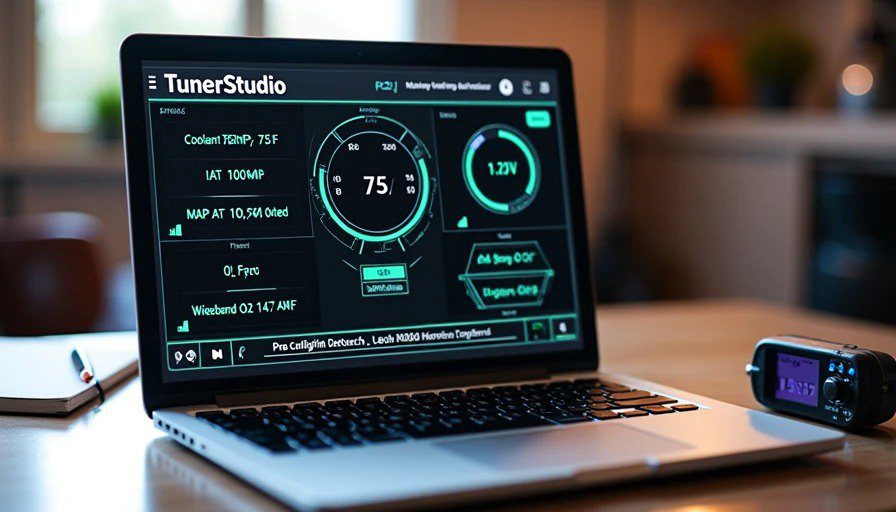
So you've taken the plunge. You've built or bought a Speeduino ECU, wired it into your car (likely a Miata, an E30, or a 240SX – the usual suspects), and you've loaded a base map that someone on the forum kindly shared. The fuel pump primes when you turn the key. The injectors click when you test them. The spark jumps when you ground a plug. You've got a wideband O2 sensor wired to the controller, and you're staring at TunerStudio with a mix of excitement and terror.
Now what?
In this post, I'm going to show you exactly what to watch for during the first engine start – and more importantly, what your first datalog should tell you. I've done this on three different engines (a Miata BP, a BMW M20, and a Honda B-series), and I've refined a checklist that separates "it runs" from "it runs well enough to drive to the dyno."
Before You Crank – The Pre-Flight Checklist
You can't interpret a datalog if your sensor inputs are garbage. Before you even think about cranking, verify these in TunerStudio while the key is in the "ON" position (engine off):
Sensor | What to check | Good value |
|---|---|---|
Coolant Temp (CLT) | Should match ambient (within 5°F) | ~70-90°F if engine cold |
Intake Air Temp (IAT) | Should match ambient | ~70-90°F |
Manifold Air Pressure (MAP) | Should read atmospheric pressure | ~100 kPa (at sea level) |
Throttle Position (TPS) | 0% at closed, 100% at wide open | 0-100% sweep |
Battery Voltage | Should be >12.0V (key on) | 12.2-12.8V |
O2 Sensor (Wideband) | Should read 14.7:1 in free air (or 20.9% oxygen) | ~14.7 (or 20.9 if unpowered) |
Trigger Input | RPM should be 0 (engine off) – but the signal should show "Sync" status | "Sync" = green/OK |
If any of these are wrong, stop. Fix the wiring or the sensor calibration. A 50°F offset in coolant temp will send your fueling into the wrong zip code.
The First Crank – What to Watch in Real-Time
Now turn the key. Don't crank for more than 5 seconds at a time – give the starter a break. Watch these five critical values on your TunerStudio dashboard:
1. RPM (Engine Speed) – This is the most important. If you see 0 RPM while cranking, the ECU isn't seeing the crank or cam trigger. Check your VR or Hall sensor wiring, or your trigger settings (tooth count, missing tooth position). If you see RPM around 150-250 while cranking, you're in the game. If it jumps erratically (0 to 900 to 0), your trigger signal is noisy – add a pull-up resistor or adjust the trigger edge.
2. MAP (Manifold Pressure) – While cranking, MAP should drop from 100 kPa to about 70-85 kPa (depending on your engine's volumetric efficiency). If it stays at 100 kPa, you have a vacuum leak, a dead MAP sensor, or the throttle is wide open. If it drops too low (below 60 kPa), you might have a restriction or the engine is pulling strong vacuum – that's actually a good sign.
3. Pulse Width (PW) – This is how long the injectors are open, in milliseconds. During cranking, PW should be around 4-8 ms for a typical 4-cylinder on a cold start. If you see 0 ms, the injectors aren't firing – check your injector wiring, flyback board, or the "Fuel Pump" output. If you see >15 ms, you're massively over-fueling – it'll flood.
4. AFR (Wideband) – As soon as the engine fires, the wideband should start reading something. During cranking and the first few seconds, you might see 10-12:1 (rich) because of the cranking enrichment. If it shows 18-20:1, you're too lean – the engine probably won't start. If it shows 9:1, you're way too rich – you'll smell fuel and see smoke.
5. Sync Status – Look for the "Status 1" or "Sync" indicator. It should show "Sync" or "Trigger OK" while cranking. If it shows "No Sync," the ECU doesn't know where the engine is in the cycle – you have a trigger angle or cam/crank phase issue.
It Fires! – Now What?

If the engine catches and runs – even if it's rough – congratulations. Now you're in the "idle tuning" phase. But before you touch any settings, record a datalog for at least 60 seconds.
To record: In TunerStudio, go to the "Data Logging" menu → "Start Logging." Name the file (e.g., "first_start_2026-07-13.msl"). Let the engine run, and keep your hands off the throttle unless it's about to stall. Let the ECU do its thing with the base map. After 60 seconds, stop the logging.
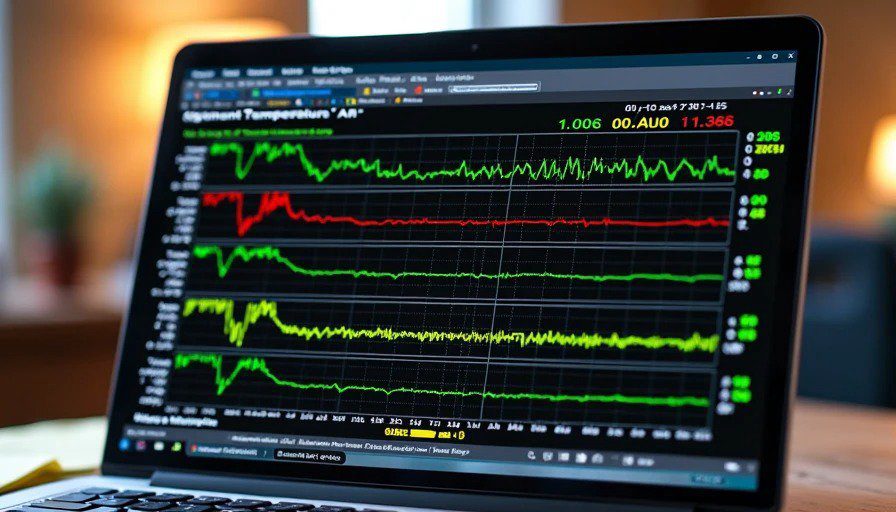
Now open that datalog in Megalog Viewer or Excel – and look for these 7 things:
7 Things to Check in Your First Datalog
1. Warmup Enrichment Curve – The coolant temp should rise from cold to about 180°F (if your thermostat is working). As it rises, the "Warmup Enrichment" (WUE) percentage should decrease – typically from about 130% at cold to 100% at operating temp. If WUE stays at 130% even at 180°F, your coolant sensor is stuck or your WUE table is wrong.
2. AFR Stability at Idle – Look at the AFR trace. It should stabilize around 13.5-14.5:1 at idle once the engine is warm. If it's oscillating wildly (12 to 16 to 12), your PID idle control is too aggressive or your VE table is wrong. A slight oscillation of ±0.3 AFR is normal. Anything bigger and you're chasing a tuning issue.
3. MAP at Idle (hot) – Once warm, your MAP at idle should be:
For a stock-ish cam: 35-45 kPa
For an aggressive cam (big overlap): 45-60 kPa
If your MAP is above 60 kPa at idle, you have a vacuum leak or the idle valve is stuck open. If it's below 30 kPa, your idle speed is too low or your cam timing is off.
4. Ignition Timing at Idle – Check the "Ignition Advance" in the datalog. It should be 10-15° BTDC at warm idle. If it's 0° or negative, your trigger offset is wrong – the engine will feel sluggish and may overheat. If it's 25° or more, your base timing is too advanced – you'll hear pinging.
5. Battery Voltage – Does It Hold? – As the engine runs, voltage should be 13.5-14.2V with the alternator charging. If it drops below 12.5V at idle, your alternator is weak or your pulley ratio is wrong. Low voltage affects injector and coil performance.
6. Idle Speed Control (IAC) Duty Cycle – If you're using a PWM idle valve, the duty cycle should be 30-50% at warm idle. If it's at 0%, the valve is closed – you'll have to adjust the throttle stop. If it's at 100%, the valve is wide open – you need a smaller valve or an air bypass.
7. Pulse Width – Is It Consistent? – The PW should be steady at idle, within ±0.2 ms. If it's jumping from 4 ms to 7 ms and back, your VE table is too coarse or your injector dead time is wrong. This will make the idle hunt and surge.
The 5-Minute Rule
Here's a rule I follow: Never change a setting based on the first 30 seconds of running. The engine is cold, enrichment is active, and the O2 sensor is still heating up. Let it run for a full warm-up cycle (until the cooling fan cycles on and off) before making any VE or timing changes.
During that first warm-up, your only job is to keep it running. If it stalls, restart it. If it idles high, let it. Just watch the datalog and note what the ECU is doing.
After it's warm, make ONE change at a time – and record another datalog to confirm the effect. Don't be the guy who changes VE, timing, and idle speed all at once and then wonders why it runs worse.
Common First-Start Fails and What They Look Like in the Datalog
Fail 1 – Engine cranks but won't fire:
RPM shows 0 → trigger issue
RPM shows cranking speed but PW = 0 → injector wiring or fuel pump not priming
RPM shows cranking, PW > 0, but AFR shows 20.0 (lean) → not enough cranking fuel (increase "Cranking Pulsewidth" table)
Fail 2 – Engine fires, then dies immediately:
PW spikes at crank, then drops to 0 → the "After Start Enrichment" (ASE) is too short or the value is zero
RPM shoots to 1,000 then drops to 0 → your "Idle RPM" target is too low for a cold engine
MAP reads very low (30 kPa) right after start → the engine is stalling because the throttle is closed – adjust the idle screw or increase "Cranking RPM" threshold
Fail 3 – Rough idle, surging:
AFR oscillates between 12 and 17 – VE table is too rich at some points, too lean at others
IAC duty cycle is at 100% – valve can't control idle; reduce idle air bypass or increase the "Idle Duty" table
Timing jumps from 10° to 25° and back – the ignition table is too sensitive near idle; smooth out the cells
My Own First-Datalog Disaster
I'll never forget my first Speeduino start on a Miata BP. The engine fired up, ran for 3 seconds, then died. I cranked it again, same thing. I pulled the datalog and saw: RPM was good, PW was good, but AFR showed 19.0 right before it died. The engine was leaning out and stalling. I looked at the Warmup Enrichment table – the previous owner had set it to 80% at cold, which is leaner than warm. I changed it to 130%, and it fired and stayed running. That one correction took me two hours to find because I didn't know what to look for.
Now I have a checklist on a sticky note next to my monitor. I've refined it to exactly what I described above. It's saved me countless hours.
Your Next Steps
Once you've reviewed the first datalog and confirmed that:
The engine runs at warm idle with AFR stable
MAP is within expected range
Timing is correct
Voltage is healthy
No error codes (Trigger Sync loss, etc.)
…you're ready to start tuning the VE table and spark table for driveability.
But that's for another post. For now, just get a clean, stable idle that doesn't stall when you blip the throttle. Then you can take it around the block and record a driving datalog – which is a whole new level of fun.
What to Post in the Comments
If you're doing your first Speeduino start right now, post a screenshot of your TunerStudio dashboard (or a summary of your datalog values). I – and others – can help you spot what's wrong. And if you've already been through this, share your own "first datalog disaster" story. The more examples we have, the easier it is for the next guy.
Remember: every tuner starts somewhere. The only difference between a beginner and a pro is how many times they've stared at a datalog and said, "Oh, that's what that means."
Now go make some noise – and log it.


No comments yet.