The first rule with BMW E30 parts is simple: do not buy the shiny solution before you understand the tired one. An E30 can hide worn bushings, brittle wiring, cracked cooling plastics, and decades of questionable repairs under a clean-looking shell. The right build starts with a baseline inspection, a written parts list, and a clear goal for the car. A 1987 325i used for Sunday drives needs a different strategy from a stripped 318is track car, even when both wear the same boxy bodywork.
This is where a build journal earns its keep. Record the VIN, production date, engine code, transmission, wheel size, and current suspension height before ordering anything. Photograph every connector and bracket during disassembly. Save receipts and note the mileage when a component goes in. Six months later, those details are more useful than memory, especially when a replacement part looks almost right but does not fit.
Start with a chassis audit
Before shopping for BMW E30 parts, lift the car safely and inspect the structure. Look closely at the front frame rails, rear subframe mounting points, rocker panels, floor pans, spare-tire well, and battery area. Surface rust is a project; perforation around suspension mounts is a much larger decision. A magnetic pick, inspection light, and small screwdriver can reveal more than a quick walk-around.
Measure ride height from the wheel center to the fender lip, check wheel bearing play, and inspect the driveshaft guibo for cracking. On a car with unknown history, budget for control-arm bushings, rear trailing-arm bushings, tie rods, ball joints, and engine mounts. A complete rubber refresh can run roughly $500 to $1,200 in parts depending on brand and scope, but it transforms how the car communicates.
Do not ignore fluid leaks. A damp differential cover, power-steering hose, or oil pan may be manageable, while coolant dripping from the back of the cylinder head deserves immediate attention. Make a three-column list: safety, reliability, and performance. Finish the first two before chasing horsepower.
Choose parts by the car's actual job
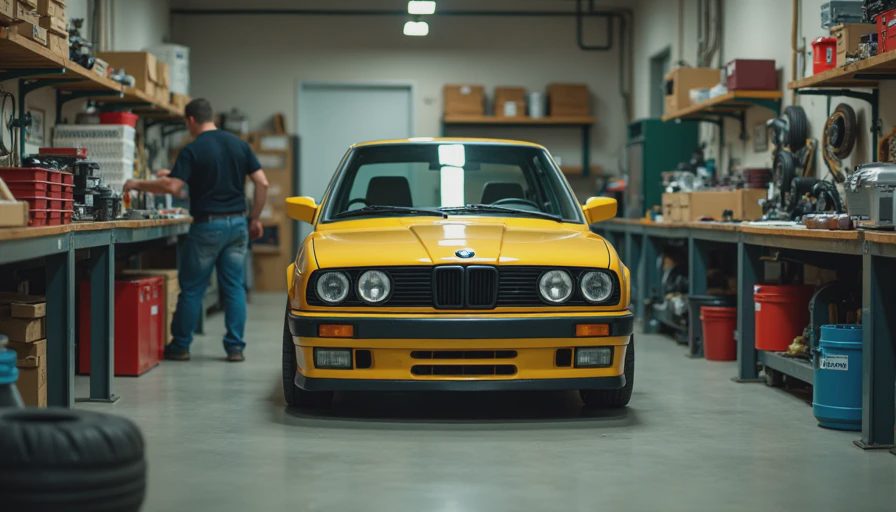
BMW E30 parts should support a defined use case. For a street car, fresh Sachs dampers, quality springs, new mounts, and sensible alignment settings usually deliver more enjoyment than an extreme coilover setup. A track-focused build can justify adjustable dampers, higher spring rates, camber plates, and improved brake cooling, but those upgrades bring more noise, maintenance, and setup work.
Brands matter, but application matters more. Lemforder is commonly chosen for steering and suspension components, while Sachs remains a familiar option for dampers and clutch hardware. Continental and Gates are established names for belts and hoses. For cooling-system work, compare the radiator material, hose routing, expansion-tank quality, and included hardware rather than buying solely on price.
A $40 bargain bushing that must be pressed in twice is not cheaper than a $70 part that fits on the first attempt. Keep the original fasteners in labeled bags, and replace damaged hardware with the correct grade and thread pitch. Mixing metric bolts because one is close enough is how a clean assembly becomes a future failure.
Cooling, fuel, and electrical reliability
Many E30 projects become reliable only after the cooling system receives a complete review. Replace old plastic components that show whitening, swelling, or surface cracks. Inspect the radiator, water pump, thermostat housing, fan clutch, auxiliary fan, hoses, and temperature switch as a system. BMW E30 parts for this area are often inexpensive compared with the labor required to clean up an overheating event.
The fuel system deserves the same discipline. Check the pump noise, fuel lines, tank condition, filter date, and injector seals. A car that sat for years can have varnish and corrosion where a test drive reveals nothing. Use new clamps designed for fuel injection rather than generic worm-drive clamps that cut into hose material.
For electrical work, clean grounds before replacing expensive components. Inspect the battery tray, engine ground strap, fuse box, main relay, crank position sensor wiring, and instrument-cluster connections. Photograph connector locations, then use a wiring diagram and a multimeter. Guessing can turn a five-minute ground repair into a week of chasing intermittent faults.
Brakes, wheels, and alignment
A fast E30 is only as good as its braking system. Start with caliper condition, rotor thickness, pad wear, flexible hose age, and master-cylinder feel. Stainless braided lines can sharpen pedal response, but they do not fix air, worn calipers, or a failing master cylinder. Flush the system with fresh fluid appropriate for the car's use, then bleed in a consistent order.
Wheel choice changes the entire project. A lightweight 15-inch wheel with a quality 205-width tire can preserve the E30's balance and steering feel. Larger wheels may offer more brake clearance, but extra weight can blunt ride quality and increase the chance of fender interference. Check offset, width, center bore, tire sidewall clearance, and suspension travel at full lock before committing.
After replacing suspension components, get a four-wheel alignment and keep the printout with the build records. For a street car, conservative toe settings and even front camber are a sound starting point. A track car can use more negative camber, but tire temperatures and wear should decide the next adjustment, not internet bravado.
Buying used and new components
Used BMW E30 parts can be valuable when the item is discontinued, cosmetic, or original in a way that reproduction pieces are not. Interior trim, correct fog-light brackets, early grilles, wheels, and certain body panels deserve careful comparison. Ask for close photographs of mounting tabs, connector pins, threaded holes, and part labels. A seller who cannot show those areas is not giving you enough information.
New parts are usually the better choice for brakes, belts, seals, hoses, bearings, and safety-critical hardware. Compare catalog illustrations and dimensions, because E30 details can change with model year, engine, market, and body style. Confirm whether a part is for a two-door, four-door, convertible, or Touring before pressing the order button.
Keep a small shelf of removed originals until the replacement has been test-fitted. That old bracket may reveal a missing spacer, and the original hose may clarify routing. Returnable parts and measured notes save money when catalogs are vague.
Turn the project into a permanent record
The best BMW E30 parts list is not a shopping cart; it is a record of decisions. Write down why a component was selected, what alternatives were rejected, the installed torque, and the first test result. Note changes such as a 3.73 differential, shorter shift lever, fresh engine mounts, or a different tire compound. Future troubleshooting becomes a comparison exercise instead of guesswork.
Use clear photos before, during, and after each job. Include a ruler beside damaged components, mark left and right parts, and photograph torque-angle tools or alignment readings when relevant. A forum post that says “installed suspension” disappears into noise. A build entry with measurements, part numbers, fitment notes, and the failed first attempt becomes useful to the next owner.
Budget in stages. A dependable baseline might take $2,000 to $4,000 in parts before major engine work, while a serious suspension, brake, and drivetrain program can move well beyond that. Spend first on structure, control, and cooling. Add power after the chassis proves it can handle repeated use. Post your build, including the mistakes and re-dos. We'll read the whole thing.


No comments yet.