There is a particular satisfaction in cars with supercharger systems: you roll into the throttle, the belt starts working immediately, and torque arrives without waiting for exhaust energy to build. For a long-term project, that response is only part of the appeal. A good supercharged build gives you a clear mechanical path, plenty of data to log, and several ways to improve the result without turning the garage into a parts roulette table.
The right platform depends on your target power, fabrication skills, fuel access, budget, and tolerance for heat. A stock-looking 300-horsepower street car and a 700-horsepower drag project need very different decisions. Start with the engine and drivetrain you already understand, then build a system around those limits.
What makes superchargers different
A turbocharger uses exhaust gas to drive its compressor. A supercharger takes power directly from the engine, usually through a belt, gear drive, or electric motor. That direct connection creates immediate boost and a predictable throttle feel. Roots and twin-screw units are positive-displacement designs, so they move air on every revolution. Centrifugal units behave more like belt-driven turbochargers, building boost progressively as engine speed rises.
Among cars with supercharger hardware, the factory arrangement is often the easiest starting point. The Chevrolet Camaro ZL1, Dodge Challenger Hellcat, Cadillac CTS-V, Jaguar F-Type R, and Ford Mustang Shelby GT500 all demonstrate different versions of the same idea: strong driveline parts, calibrated fueling, intercooling, and engine management designed together. Older platforms such as the Mustang 4.6 modular V8, GM LS engines, and Toyota 2GR-FE V6 also have deep aftermarket support.
Do not compare only advertised horsepower. Look at the compressor type, intercooler layout, pulley availability, belt length, injector capacity, and ECU access. Those details determine whether the build stays enjoyable six months after the first test drive.
Choosing a platform for a long build
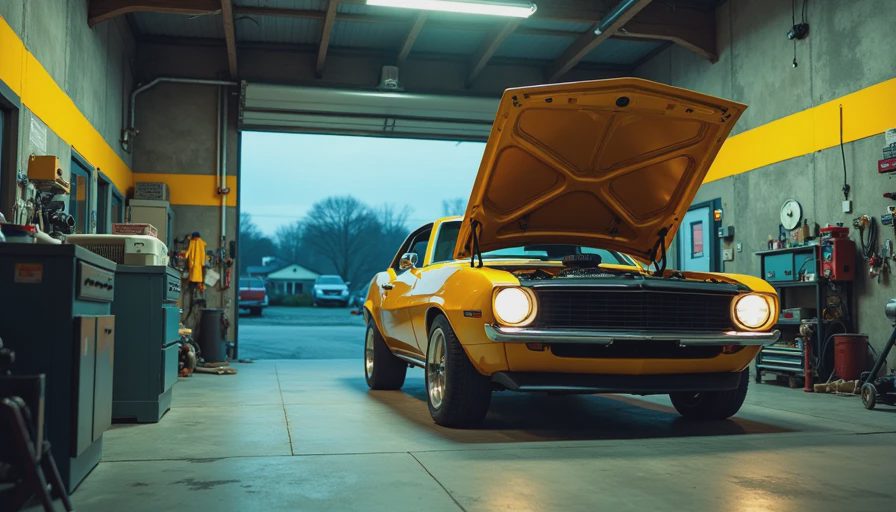
The best cars with supercharger potential usually have a large knowledge base and affordable replacement parts. A Mustang GT with a Coyote V8 is a common example. The engine bay has room, tuning support is broad, and complete kits from companies such as Whipple, ProCharger, Vortech, and Edelbrock make the first phase relatively straightforward. A quality kit can cost roughly $6,000 to $12,000 before installation, fuel-system upgrades, clutch work, and tuning.
An LS-powered Camaro or Corvette offers a different advantage: compact packaging, plentiful engine parts, and strong used-market availability. A Magnuson TVS-style kit can produce excellent street manners, while a centrifugal kit leaves more room for a high-rpm power curve. The tradeoff is that older cars may need attention to wiring, cooling, brakes, bushings, and fuel delivery before boost is added.
A Mercedes-AMG, Jaguar, or factory-supercharged Audi can be a compelling choice if you want an unusual build with OEM refinement. However, replacement parts, scan tools, and specialized labor can raise the budget quickly. Before buying, download a service manual, inspect the parts catalog, and identify whether the original supercharger, bypass valve, and intercooler components are still available.
Roots, twin-screw, or centrifugal?
Roots blowers make strong low-rpm torque and produce the classic instant shove associated with cars with supercharger conversions. They are effective for a heavy street car because the engine does not need to spin high before the vehicle moves hard. Their weakness is heat. Compressing air raises its temperature, and repeated pulls can reduce power if the intercooler and heat exchanger are undersized.
Twin-screw units also deliver substantial low-end torque, but their internal compression process is generally more efficient than a traditional Roots layout. They are popular when the target is broad street power rather than a narrow peak number. Whipple and Kenne Bell systems are familiar names in this space, with applications covering several Ford and GM engines.
Centrifugal superchargers from ProCharger, Vortech, and Paxton build boost with engine speed. That makes them easier to manage on street tires at low rpm and attractive for road-course or high-rpm builds. They also require careful attention to belt alignment and tension. A bracket that flexes under load can turn an expensive pulley system into a belt-eating problem.
Supporting hardware matters more than the dyno number
Boost exposes weak parts quickly. Before installing a blower, compression-test the engine, inspect oil pressure, verify cooling-system health, and check crankcase ventilation. A tired radiator or cracked vacuum hose is not made better by adding 10 pounds of boost.
Fuel capacity comes first. Larger injectors, a higher-flow pump, upgraded wiring, and a fuel-pressure sensor give the tuner usable headroom. On gasoline, many street builds start with conservative boost and premium fuel. E85 can support more aggressive ignition timing because of its resistance to detonation, but it requires more volume and reliable local access. Flex-fuel capability is useful only when the sensor, calibration, and fuel system are all installed correctly.
Cars with supercharger kits also need a serious plan for charge cooling. Air-to-air intercoolers are simple and effective when front-end space is available. Air-to-water systems can shorten intake plumbing and work well in compact engine bays, but the pump, reservoir, heat exchanger, and coolant routing all become potential failure points. Log intake-air temperature, coolant temperature, fuel pressure, and commanded versus actual lambda instead of relying on a single dyno pull.

Drivetrain, brakes, and chassis preparation
Engine power is only useful if the rest of the car can transmit and control it. A stock clutch that survives naturally aspirated torque may slip after the first full-boost pull. Automatic transmissions need appropriate fluid temperature control, a suitable converter strategy, and a calibration that does not command damaging pressure or shift behavior. Manual cars often benefit from a stronger clutch, fresh hydraulic components, and an inspection of the differential mounts.
Tires are the first traction upgrade. A modern 200-treadwear summer tire can transform a street build, while a drag radial can change the stress placed on axles, half-shafts, and differentials. Match the tire to how the car is used; a tire that works at the strip may be frustrating in rain or cold weather.
Do not overlook brakes and suspension. Better pads, high-temperature fluid, stainless lines, and fresh rotors matter more than decorative hardware. Adjustable dampers can help, but only after alignment, bushing condition, spring rates, and ride height are documented. Record baseline stopping distances and corner weights when practical so every modification has a measurable result.
A reliable tuning and testing sequence
The safest path for cars with supercharger projects is staged testing. First, pressure-test the intake tract and inspect every clamp. Then verify base fuel pressure, injector data, throttle operation, and wideband sensor placement. Start with the wastegate or pulley arrangement that produces the least practical boost, even if the hardware can make much more.
A professional tuner should work from known injector characterization and accurate airflow data. Save the original calibration, each revision, and the conditions for every pull. On the road, use a repeatable route and log rpm, manifold pressure, ignition timing, knock feedback, air-fuel ratio, and intake temperature. If a belt slips, fuel pressure falls, or knock activity rises, stop testing and fix the cause rather than smoothing the graph with a more aggressive calibration.
For a first season, conservative timing and a dependable 450 horsepower are usually more rewarding than an unreliable 600. The car starts every morning, survives traffic, and gives you clean data for the next phase. That is how a project becomes a build journal instead of a collection of expensive emergency repairs.
Building a useful project record
Document part numbers, pulley diameter, belt length, injector flow rate, spark-plug gap, fluid types, torque values, and every change to the tune. Photograph routing before removing the factory harness. Note ambient temperature and fuel blend during dyno sessions. These details save hours when a problem appears later.
Cars with supercharger setups reward patience because small changes interact. A smaller pulley can require more fuel, better cooling, stronger belt control, and a revised calibration. A larger throttle body may improve airflow, but it will not repair an undersized intercooler. Treat each change as an experiment with a baseline, a measurement, and a clear reason.
Whether you begin with a factory ZL1, an LS-swapped project, a Mustang, or an overlooked V6, the winning approach is the same: choose a supported platform, protect the fuel and cooling systems, and let the logs decide what happens next. Post your build. We'll read the whole thing.

No comments yet.