If you have ever spent an evening scrolling through junkyard listings looking for a Toyota V8, the motor 2UZ-FE is probably already on your radar. This 4.7-liter, dual-overhead-cam engine powered some of Toyota's toughest SUVs and trucks for more than a decade, and it has become a favorite swap candidate for builders who want Toyota reliability. In this guide, we will cover motor 2UZ-FE specs, the vehicles it came in, the problems people actually run into, and the upgrades that matter if you decide to build one.
What Is the Motor 2UZ-FE?
The motor 2UZ-FE is a 4.7-liter, 90-degree V8 produced by Toyota from 1998 through 2009. It uses a cast-iron block, aluminum DOHC cylinder heads, four valves per cylinder, and a timing belt at the front of the engine. The bore and stroke work out to about 94 mm by 84 mm, for a total displacement of 4,664 cc. Depending on the year and the vehicle it was bolted into, power ranged from roughly 230 horsepower up to around 275, with peak torque sitting near 320 to 330 lb-ft. In stock trim, the engine feels torque-rich from idle to about 4,500 rpm, and it pulls hard right up to its 5,500-rpm redline. It was designed to haul heavy loads and keep going for hundreds of thousands of miles.

Where Toyota Put the 2UZ-FE
Toyota originally developed the motor 2UZ-FE for its full-size off-road SUVs and trucks. Here are the most common places to find one in a North American scrapyard:
- Toyota Land Cruiser 100 and Lexus LX470 (1998-2007)
- Toyota Tundra (2000-2008)
- Toyota Sequoia (2001-2007)
- Toyota 4Runner V8 (2003-2009)
- Lexus GX470 (2003-2009)
Almost all of these share the same short block, heads, and intake manifold design, but there are differences in the wiring harness, exhaust manifolds, and engine mounts. If you are planning a swap, grab the complete engine with the harness, ECU, and all sensors from the donor truck. That makes the wiring job dramatically easier, especially when you are putting the engine into a chassis that never came with a V8.
Reliability and Common Problems
The motor 2UZ-FE has earned a reputation for being nearly unkillable. It is common to find examples with well over 250,000 miles that still run clean and burn no oil. But there are a few known weak points:
- Timing belt and water pump need service every 90,000 miles. One saving grace: this engine is a non-interference design, so if the belt snaps, you usually only need a new belt and a tow home, not a new head assembly.
- Valve cover gaskets leak over time. The fix is cheap and straightforward, but the leak can cause a burning smell if oil drips onto the exhaust.
- Starter motor contacts wear out, causing a single click instead of a crank. Replacing the contacts is a common weekend job.
- Throttle body and MAF sensor get dirty or fail, leading to rough idle and poor throttle response.
- Early exhaust manifolds can crack, creating a ticking noise that is easy to mistake for a stuck lifter.
None of these are deal breakers. They are the normal wear items on a 20-year-old V8.
Performance Upgrades for Project Builders
Let's be honest about the motor 2UZ-FE: it is not a cheap power king. The aftermarket scene is small compared to the GM LS world, and big power costs serious money. That does not mean the engine is boring. Here is what actually works:
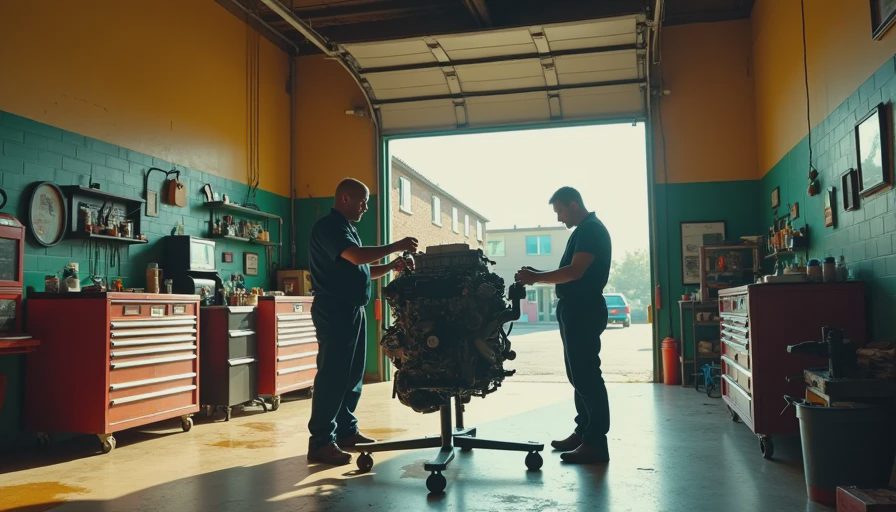
- Add long-tube headers and a mandrel-bent 2.5-inch exhaust. You might pick up 10 to 20 horsepower across the curve, and the sound becomes more like a proper small-block.
- Install a cold air intake and give the ECU a chance to adapt. Stock tuning leaves some power on the table, but the stock ECU is not easy to reflash. A standalone ECU such as an AEM Infinity or Holley Dominator is the serious builder's answer.
- Consider forced induction. A roots-style supercharger kit from a brand like Magnuson gives the engine the punch it lacks from the factory. They are not cheap, but they are the only realistic way to make real power without a custom turbo setup.
- If your goal is a reliable daily driver or an off-road rig that never leaves you stranded, leave the internals alone. The stock bottom end and rod bolts will handle everything you can throw at them.
Maintenance Essentials for a Long Life
Whether you are running a bone-stock Tundra or a swapped-in project, the maintenance routine is the same simple list:
- Use 5W-30 full synthetic engine oil and change it every 5,000 miles. The 2UZ-FE holds just over six quarts with the filter.
- Replace the timing belt, idler pulleys, and water pump every 90,000 miles. Use OEM or an Aisin timing belt kit, not mystery box parts.
- Use Toyota Red coolant, and flush the cooling system every few years to prevent corrosion in the heater core.
- Replace spark plugs every 100,000 miles. The coil-on-plug ignition means there are no plug wires to worry about, but the coils themselves can eventually crack and cause misfires.
Should You Build Around a Motor 2UZ-FE Today?
If you want a dependable torque-rich V8 for a 4x4 build, an overlander, or a Toyota-bodied project car, the 2UZ-FE is still a great choice. Used examples are available from a few hundred dollars for a salvage-yard pull to two thousand or more for one with complete wiring and low miles. The downsides are the same ones we outlined earlier: it is heavy, it does not rev, and it lacks serious aftermarket support. But if your top priority is a motor that starts every morning and never complains, this one is hard to beat.

No comments yet.