If you’re shopping headers and exhaust for a project car, the first thing to know is that the cheap route is not always the smart route. The right combo can sharpen throttle response, clean up the way an engine pulls past 3,000 rpm, and give the car a sound that feels earned instead of obnoxious. The wrong combo buys you drone, fitment headaches, and a check-engine light you will stare at every time you start the car. I have seen builds where a simple cat-back made the owner happy for years, and others where a long-tube swap turned into a weekend of scraped knuckles, extra gaskets, and a second trip for tuning.
The sweet spot depends on the engine, the use case, and how much noise you can live with on a commute. For a mild street build, headers and exhaust should be treated as one system, not two separate parts you buy because a forum thread said they were “worth it.”
How headers and exhaust change the shape of a build
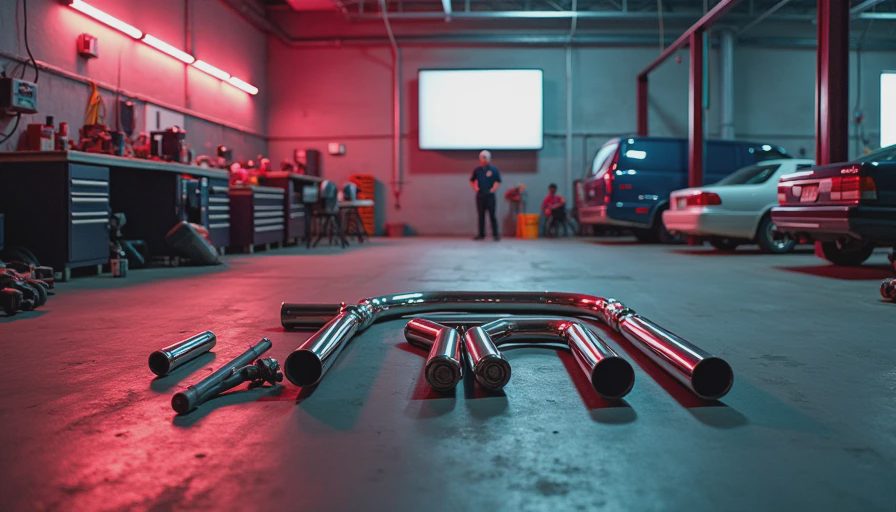
The main job of headers is to help the engine evacuate spent gases more efficiently. Stock exhaust manifolds are usually compact and quiet, but they are not built to make the cylinders breathe cleanly at higher rpm. A better header can reduce restriction and improve scavenging, which is why some engines pick up torque in the midrange and some feel stronger all the way to redline. On a naturally aspirated setup, the gain is real enough to feel from the driver seat, even when the dyno number is modest. On a turbo car, the story changes because the turbo itself creates a major restriction point, so the payoff is often more about response, heat control, and future support parts than a huge power jump.
That is also why headers and exhaust should be matched. A free-flowing header feeding a tiny, crushed aftermarket system is wasted money. A big-pipe system behind a choking manifold is the same problem in reverse. The build gets better when the whole path from the exhaust ports to the tailpipe is sized for the engine’s airflow and intended rpm range.
Picking the right header design
Shorty headers usually make the most sense when you want easier installation, better ground clearance, and fewer emissions headaches. They tend to keep the factory-style layout, so they are often friendlier on daily drivers and cars with tight engine bays. Long-tube headers are the more aggressive choice. They usually cost more, take longer to install, and may require relocating or extending O2 sensor wiring, but they can deliver stronger gains on a well-matched V8 or high-revving four-cylinder.
Tube diameter matters too. Bigger is not automatically better. An engine that wants crisp low-end response can get lazy if the tubes are oversized. Equal-length designs can help the cylinders pulse more evenly into the collector, while unequal-length designs sometimes fit easier or make a sound people like for reasons that have less to do with charts and more to do with taste. Brands like Kooks, Hooker, and Hedman cover a wide range of applications, while ceramic coating is worth looking at if you want to keep heat out of the engine bay and protect the tubes from rust.
Choosing the rest of the system without creating drone
Once the header is sorted, the rest of the exhaust needs the same kind of attention. A 2.25-inch system works well for many four-cylinder and mild six-cylinder builds. A 2.5-inch system is a common middle ground for street cars that still want manners. Three-inch piping starts making sense when airflow is high enough to justify it, especially on boosted engines or higher-output V8s. If you go too large, you can lose velocity and end up with a car that sounds hollow without going any faster.
Muffler choice changes the personality more than most people expect. A Borla, MagnaFlow, or Corsa cat-back can all sound clean, but they do it differently. A straight-through muffler is usually freer-flowing and louder, while a chambered design can give a deeper tone with a little more character. Resonators are not optional if drone matters to you. If the car sees highway miles, adding one in the right spot is often cheaper than living with a constant 2,000 rpm buzz that ruins every commute. Stainless steel also matters: 304 stainless is the premium play for corrosion resistance, while 409 stainless is common and usually fine for a car that lives in a normal climate.
Fitment, heat, tuning, and the stuff people forget
The best parts list still fails if the installation is sloppy. Check spark plug access, steering shaft clearance, starter clearance, and crossmember clearance before you buy. On some chassis, a header that looks perfect in photos will still force you to unbolt the engine mount or fight the passenger-side tube with a pry bar. New gaskets, fresh hardware, and a proper torque sequence save time later. If the manufacturer calls for 18 to 25 lb-ft on a flange, use a torque wrench and recheck it after a few heat cycles instead of guessing.
Heat management deserves real attention. Ceramic coating, heat wrap in limited spots, and a good firewall strategy can protect wiring and brake components. If the car uses O2 sensors, make sure the bungs are placed correctly and the tune is ready for the new flow. A lot of people bolt on hardware and then wonder why the fuel trims drift or the idle gets strange. If the engine management sees a different exhaust signal, it wants the calibration to match.

A smart upgrade path that keeps money in the build
If the budget is tight, do not buy shiny parts in the wrong order. Start with the restriction point that limits your specific car. On a mild naturally aspirated build, that often means a quality header first, then a mid-pipe and muffler that support the same goal. On a turbo car, the first money may be better spent on a downpipe, a well-designed cat-back, and a tune before you chase prettier polished tubing. That is where headers and exhaust earn their place: not as random bolt-ons, but as part of a complete plan.
A practical example is a street-driven V8 that gets long-tubes, a matching mid-pipe, and a resonated cat-back. The result is usually stronger top-end pull, better sound, and a cleaner engine bay layout than the factory setup. A four-cylinder street car can see a smaller but still worthwhile change, especially if the stock exhaust is choked down after the catalytic converter. Used together, headers and exhaust can make a build feel finished instead of pieced together. Post your build. We’ll read the whole thing.


No comments yet.