A good trail SUV is not built by stacking the tallest parts in the catalog. The best modified SUV off-road suspension and tire build recommendations start with the work the vehicle must actually do: rocky ledges, mud, forest roads, highway commuting, towing, or a mix of all four. A 2004 Toyota 4Runner used for weekend crawling needs a different recipe from a Jeep Grand Cherokee that carries a family during the week. The parts have to agree with one another, and the finished vehicle still needs to stop, steer, and track straight.
Before ordering anything, write down the current curb weight, factory tire size, wheel offset, axle type, and measured fender-to-hub height. Record the front and rear weights if you can access a set of scales. Armor, a winch, a second battery, roof storage, and full-size spare tires can add several hundred pounds. That weight changes spring selection and often matters more than the advertised lift number.
Start with the suspension job, not the lift number
The most useful modified SUV off-road suspension and tire build recommendations usually favor moderate lift and improved control over maximum height. A 2- to 3-inch suspension lift on a 4Runner, Wrangler, or Xterra can create useful clearance while preserving a reasonable center of gravity. Going taller often introduces longer control arms, driveshaft angles, brake-line extensions, track-bar correction, and more difficult alignment work.
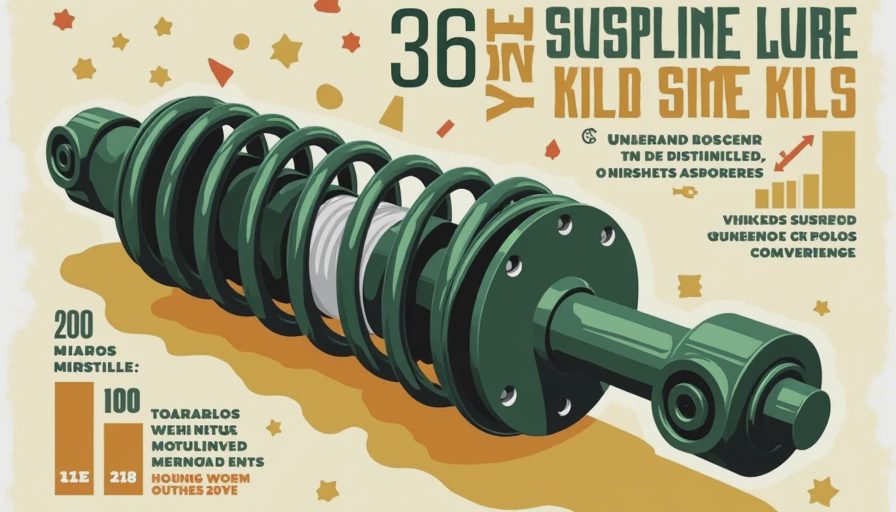
Choose springs by actual load. A front coil designed for a winch bumper can make an unloaded SUV ride harshly if the bumper never gets installed. Adjustable shocks from companies such as Fox, King, Bilstein, or Old Man Emu can help tune compression and rebound, but expensive dampers cannot compensate for the wrong spring rate. Fixed-valve Bilstein 5100 or 6112 packages are often practical choices for a daily-driven build because replacement parts and setup information are easy to find.
Measure shock travel before installation. The shock should not become the suspension limiter at full droop, and the coil spring must remain seated. At full compression, confirm that the bump stop engages before the shock body bottoms. Cycle each corner with the spring removed if necessary. That slow afternoon in the garage can prevent a bent piston rod on the first rocky descent.
Match tire size to gearing, clearance, and use
Tires are where many builds become expensive. A 33-inch all-terrain tire may be ideal for a daily-driven Jeep or Tacoma, while a 35-inch mud-terrain tire can expose weak axle shafts, wheel bearings, brakes, and gearing. Tire diameter also changes effective gearing. Moving from a 31-inch tire to a 35-inch tire makes the engine work harder in every gear, especially on hills or when towing.
The right modified SUV off-road suspension and tire build recommendations should specify tire construction, not only diameter. Load range E tires can handle serious loads but may ride firmly on a lighter SUV. A three-ply sidewall can improve resistance to sharp rocks, yet it can also reduce compliance when aired down. For mixed pavement and trail use, a quality all-terrain from BFGoodrich, Falken, Toyo, or General Tire is often easier to live with than an aggressive mud-terrain.
Check clearance at full steering lock and full compression. Test the front and rear of the tire, the inner sidewall, sway-bar links, brake hoses, and body mounts. A wheel with more negative offset may clear the control arm but push the tire into the fender. Trimming plastic is simple; cutting structural metal or relocating a body mount is a different project. Keep the spare mounted securely, because a 35-inch tire can weigh more than 80 pounds.
Build around articulation without chasing numbers
Long travel is not automatically better. An SUV with extreme droop can unload a tire on a side slope and place unusual loads on brake hoses, driveshafts, and suspension joints. A properly matched sway-bar setup often provides more predictable handling than simply disconnecting everything. On a Wrangler, a quick-disconnect front sway bar can be useful on slow trails, but it should be secured and reconnected before highway driving.
Use bump stops as tuning components. If the tire contacts the fender before the stop engages, add or reposition the stop rather than hoping the tire will flex away. Progressive foam bump stops can control the last part of travel without making the whole ride stiff. Check that the rear driveshaft, exhaust, and panhard bar have room throughout the suspension cycle.
This is also where modified SUV off-road suspension and tire build recommendations need to account for chassis age. Rusted control-arm mounts, cracked bushings, leaking steering racks, and worn ball joints should be repaired before adding leverage. New lift parts attached to tired mounting points simply move the failure somewhere more expensive.
Do the supporting systems before trail testing
Lifted tires increase steering effort and braking demand. Install fresh brake fluid, inspect rotor thickness, and verify that flexible brake lines do not stretch at full droop. A steering stabilizer can reduce kickback, but it is not a repair for loose tie-rod ends or a worn steering box. Torque suspension fasteners at ride height when the bushing design requires it, then mark the fastener heads with paint so movement is visible during inspections.
Alignment deserves a baseline and a follow-up. Set toe carefully, verify caster after lifting, and center the steering wheel before the first long drive. Adjustable front control arms may be necessary to restore caster on some independent-front-suspension SUVs. Uneven camber, wandering, or rapid inner-edge tire wear is feedback from the build, not an annoyance to ignore.
Regear when the tire increase demands it. The exact ratio depends on engine torque, transmission gearing, axle strength, and intended speed, but returning to an effective ratio close to stock can make a 35-inch-tire SUV feel far less strained. Budget for differential setup, bearings, seals, and a careful break-in procedure rather than treating gears as a casual bolt-on.
A practical build path for a garage project
A staged approach keeps the project measurable. First, repair the stock suspension and document alignment, ride height, and tire wear. Second, install springs, dampers, bump stops, and required correction parts as a matched package. Third, fit tires and wheels, then cycle the suspension before trimming. Fourth, complete alignment and brake inspection. Finally, carry tools, a tire plug kit, a compressor, recovery points, and a real spare on a local shakedown trail.
For example, a 2010 4Runner used for camping could start with 2.5-inch springs, quality monotube shocks, steel skid plates, 285/70R17 all-terrain tires, upper control arms, and a modest front bumper. That setup may be more useful than a 4-inch lift with oversized tires, especially if the owner drives 12,000 highway miles each year. The build remains serviceable, parts are widely available, and the alignment can be checked without exotic equipment.
These modified SUV off-road suspension and tire build recommendations also leave room for revision. Add the winch only after confirming front axle weight. Add heavier rear springs only when cargo requires them. Record tire pressure, shock settings, temperatures, and contact points after every trail outing. A build journal turns vague impressions into useful data.
Final inspection before the first hard trail
The final modified SUV off-road suspension and tire build recommendations are simple: inspect, measure, and test progressively. Recheck wheel-lug torque after the first drive and again after the first trail day. Look for fresh marks on the tire, shock, bump stop, driveshaft, and brake line. Confirm that recovery points are attached to strong frame structure and that the spare, jack, and tools are accessible.
Start with an easy route where a problem can be fixed without a winch or long carry-out. Increase obstacles only after the vehicle remains cool, predictable, and free of contact marks. Bring your alignment numbers and part details into your build journal, including year, model, tire size, wheel offset, spring rate, shock setting, and loaded weight. Post your build. We will read the whole thing.
No comments yet.