An E30 5 lug conversion is rarely just a hub swap. It changes the wheel pattern, brake package, track width, suspension geometry, and the list of wheels that will clear your fenders. Done carefully, it gives an E30 access to stronger hubs, larger brakes, and modern wheel choices. Done from a parts pile assembled by internet rumor, it can leave you with incorrect offsets, loose bearings, mismatched rotors, and a car that never drives straight.
The right approach is to decide what the car needs before ordering parts. A street 325i running 15-inch wheels has different priorities from an S52-swapped track car on 17-inch wheels. Start with the intended tire, brake diameter, ride height, and power level. Then choose a conversion path that supports those targets instead of forcing the rest of the build to follow one inexpensive part.
Choose the conversion architecture first
Most E30 5 lug conversion plans use a combination of E36, E36 M3, E30 M3, Porsche, or aftermarket components. These options are not interchangeable simply because they use five studs. Front and rear suspension systems have different bearing designs, axle relationships, rotor offsets, and caliper mounting requirements.
The front is often built around an E36-based hub and spindle solution, an E30 M3 component set, or an aftermarket conversion hub. Some combinations require machining, spacer rings, different strut housings, or custom brake brackets. The rear can involve E36 compact trailing arms, E30 M3 parts, modified original trailing arms, or a complete aftermarket hub and bearing arrangement. Read the kit instructions as an engineering document: identify every bearing, seal, spacer, fastener, and rotor before disassembly.
An E30 5 lug conversion using used BMW parts can look affordable at first. A pair of hubs for $150 does not remain a $150 upgrade after bearings, seals, rotors, calipers, brake lines, wheel spacers, and machine work enter the spreadsheet. A complete aftermarket setup commonly lands between roughly $1,500 and $4,000 before wheels and tires, depending on the brake package and how much work you can perform yourself.
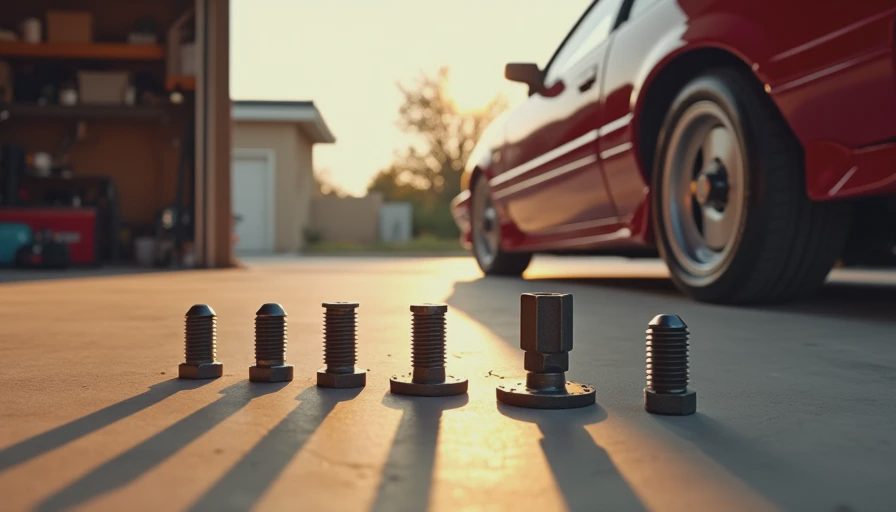
Match the brakes to the actual car
A five-lug pattern does not automatically improve stopping performance. Brake performance comes from rotor diameter, caliper piston area, pad compound, cooling, tire grip, and pedal control. A heavy four-piston caliper with an unsuitable master cylinder can produce a poor pedal even when the parts look impressive through the spokes.
For a naturally aspirated street car, a well-maintained E36 or E36 M3-based package may be more useful than the largest catalog kit. For a turbocharged car or regular track use, look for rotor thickness, pad availability, replacement cost, and ducting options. Measure wheel clearance with a template rather than trusting a photograph. Some 16-inch wheels clear one caliper body but fail against another because the spoke shape is different.
The master cylinder deserves attention. Changing front and rear piston areas alters pedal travel and brake bias. The factory proportioning arrangement may no longer suit the new hardware, especially when rear calipers become substantially larger. Keep the system balanced, use fresh fluid, and bleed it methodically. Before driving, verify that every hose is routed away from the tire at full steering lock and full suspension compression.
Wheel offset is where many builds go wrong
Wheel fitment is the part of an E30 5 lug conversion that exposes shortcuts. The new hub pattern may open the door to popular 5x120 wheels, but the wheel still has to fit the hub center, brake caliper, strut tube, trailing arm, and bodywork. Offset and width matter more than the pattern alone.
A 17x8 wheel with a moderate offset can sit very differently from a 17x8.5 wheel with the same advertised offset once tire shape and suspension camber are considered. Measure inner clearance from the wheel mounting face to the strut and outer clearance to the fender lip. A straightedge, hub stand, and inexpensive wheel spacer can help you model the position before buying expensive wheels.
Do not use spacers as a substitute for understanding the geometry. A spacer moves the wheel outward, changes scrub radius, and requires longer wheel studs or correctly specified extended bolts. Confirm that the fastener has sufficient thread engagement and that the wheel remains centered on the hub. Hub-centric rings can solve a center-bore mismatch, but they do not correct an unsafe offset or inadequate brake clearance.

Build the parts list before removing anything
A reliable E30 5 lug conversion starts with a parts spreadsheet. Record the donor model, production year, hub and bearing numbers, rotor dimensions, caliper part number, brake pad shape, wheel diameter, wheel width, offset, and tire size. Add the small parts that are easy to forget: dust shields, ABS sensors, parking brake hardware, brake hoses, axle nuts, seals, and replacement mounting hardware.
Buy bearings and seals from a known manufacturer rather than treating them as a place to save ten dollars. SKF, FAG, and Timken are familiar names in the bearing market, but verify the exact application before ordering. Used calipers can be rebuilt, yet the cost of pistons, seals, powder coating, and new bleeders can approach the price of a ready-to-run set.
During assembly, photograph each stage and record measurements. Note the installed hub thickness, rotor offset, wheel spacer thickness, and clearance at full lock. Follow the factory service procedure for bearing preload or fastener torque; do not copy a torque figure from a forum post unless it is confirmed for that exact component. After the first short drive, inspect for heat discoloration, leaks, rubbing, and play.
Validate the car before final alignment
After an E30 5 lug conversion, the car needs more than a quick toe adjustment. Check ride height on level ground, measure wheel center positions, inspect control arm and trailing arm bushings, and verify that the steering wheel returns normally. Changes in hub, spindle, or control arm parts can alter camber, caster, and track width.
Start with conservative street alignment settings and confirm tire clearance through the full range of steering and suspension travel. On a lowered car, the tire may clear while parked but contact the fender during compression. Look for witness marks on the sidewall, inner shoulder, spring perch, and brake hose. A helper can move the suspension while you watch, or you can use a jack under the control arm to simulate compression safely.
Road-test in stages. First check braking in an empty area at walking speed. Then make moderate stops and recheck all fasteners. Listen for bearing noise and pay attention to pulling under braking. Re-torque wheel fasteners after the first heat cycle, then inspect again after several drives. A build journal makes this process easier because measurements and changes remain searchable instead of disappearing in a message thread.
A practical decision for your build
The best E30 5 lug conversion is the one with a complete parts path, not the one with the most famous donor car. If the goal is a clean street car, prioritize replacement-part availability, sensible wheel fitment, and predictable brake behavior. If the goal is track use, budget for cooling, pads, studs, bearings, and repeated inspection rather than spending the entire budget on calipers.
Before ordering, write down the tire size, target wheel diameter, desired ride height, engine output, and intended use. Confirm rotor and caliper compatibility as a system. Price the hidden parts. Plan for alignment and corner inspection. Then document the result with measurements, part numbers, and photos so the next repair does not begin from guesswork.
Post your build at garagestall.com. A clear record of the donor parts, machining, clearances, torque procedure, and the problems you solved is more valuable than a perfect-looking final photograph. Builders read the whole story, including the 2 a.m. recheck that kept a promising conversion from becoming an expensive roadside lesson.

No comments yet.